Local detail
Where People Go Wrong
The biggest mistake we see is treating every garage door call the same way, regardless of when the house went up. Beaverton's housing stock runs 1964 to 2006, with the median build year landing around 1984. That forty-year spread matters because the door on a house from the early run predates any insulation requirement, while a door on a house from the late 1990s or 2000s was built to a different standard entirely.
Homeowners with doors on houses built before insulation rules often try to fix a drafty, heavy door the same way someone with a 1995 foam-core door would fix a worn weatherstrip. It's not the same job. An uninsulated steel or wood panel from the early stock sags and warps in ways a sandwich-panel door never will, and patching the symptom - a new bottom seal, a tightened hinge - doesn't touch the actual problem, which is a door that was never built to hold its shape over decades.
The other common error is assuming a quote from a neighbor in a newer pocket of the service area applies to an older block. It usually doesn't, because the door, the opener bracket, and the track hardware are frequently different generations of product entirely.
The area
The Situation
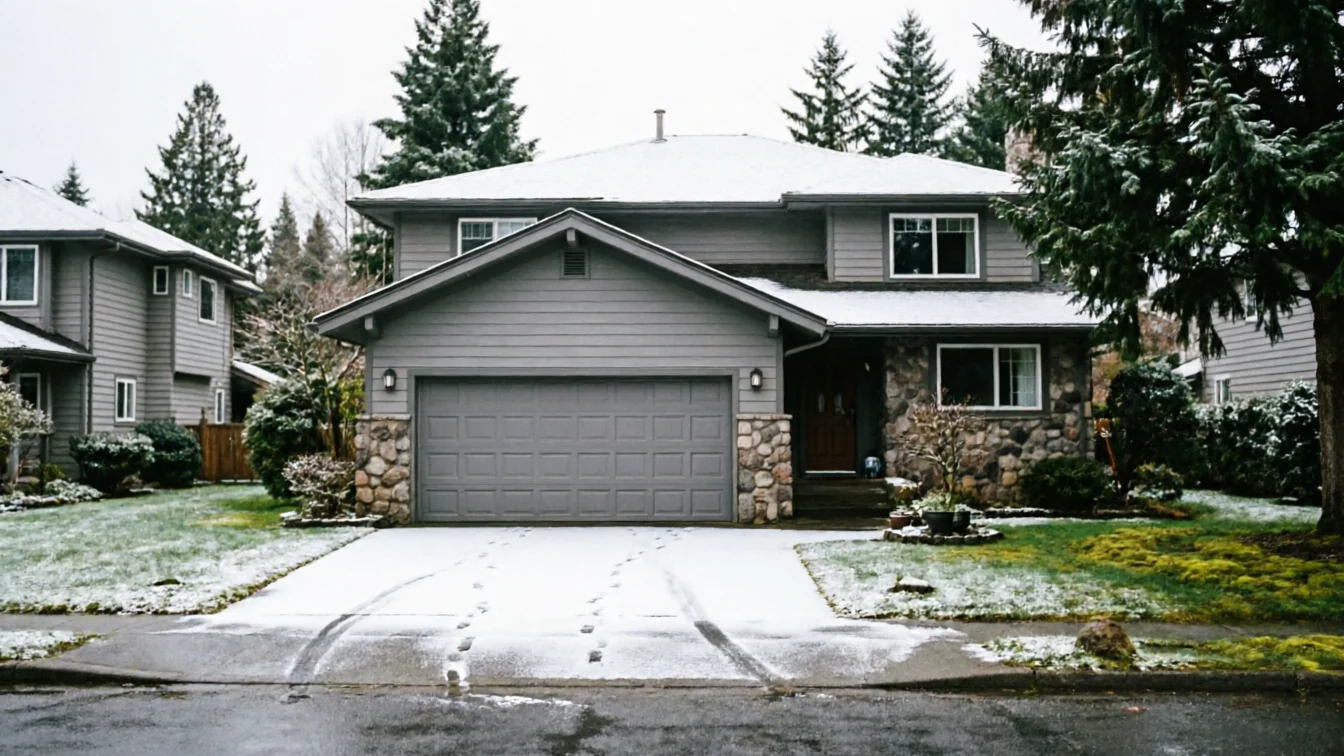
Across the roughly 32 named areas we work in - Cedar Hills, West Slope, Central Beaverton, Vose, Aloha, Raleigh Hills, Cedar Mill, and the rest out to Sherwood and Forest Grove - the bulk of the housing dates to the 1980s and 1990s. That's the dominant stock, not the exception, which means most service calls here involve doors that are somewhere between 25 and 40 years into their working life.
With 82,681 owner-occupied houses out of 173,566 households in the service area, and a median household income of $103,069, we see a lot of owners who can afford to replace rather than nurse along a door that's past its useful stretch - but plenty still choose to repair, because the hardware on an '80s or '90s door is often simpler and more serviceable than what goes into a door today.
The practical split: pre-1980s builds concentrated closer to the older core of the city tend to have single-layer doors and older torsion setups. The 1980s-2006 majority has a mix of early insulated doors and later sandwich-panel units. Knowing which decade you're in before a tech shows up saves a wasted trip and a second estimate.
What we find
When It Stops Being a DIY Job
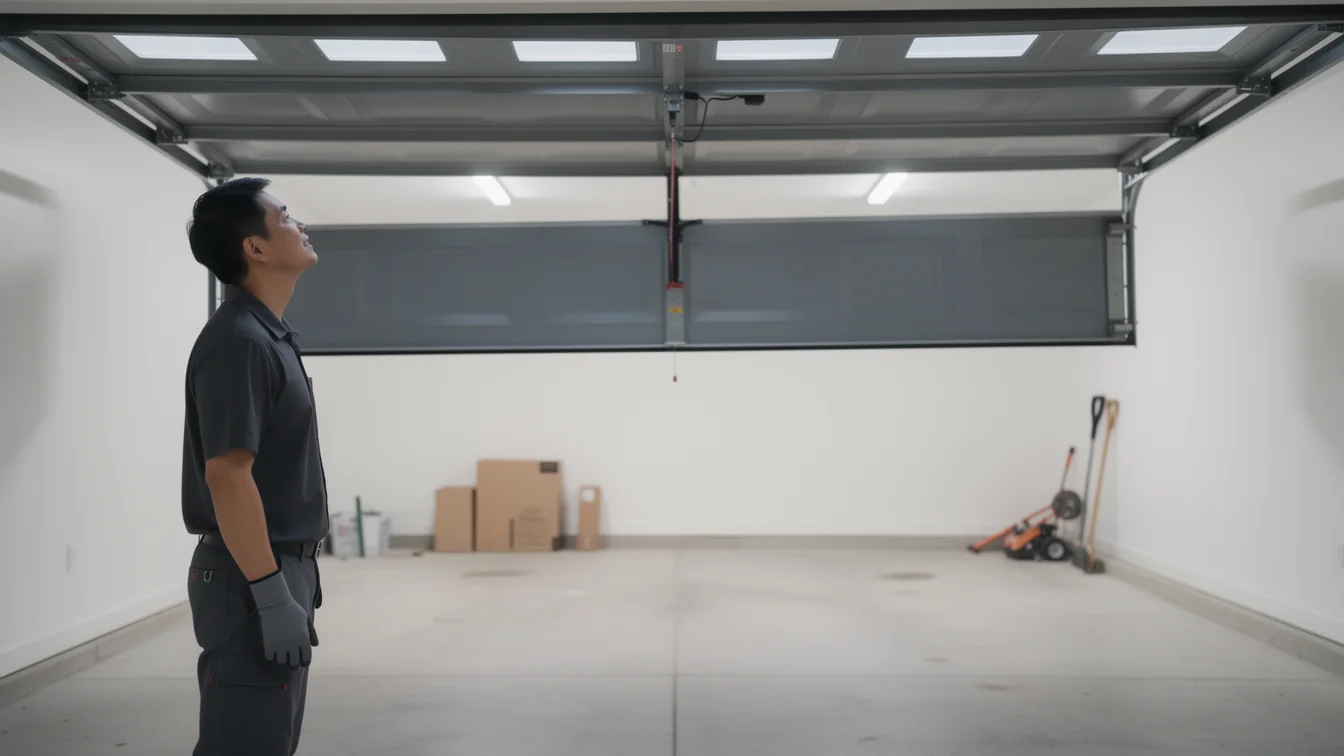
A loose roller or a noisy track on a door from the 1990s stock is often a real DIY fix - lubricate, tighten, done. But once you're dealing with doors on houses built before insulation rules, the calculus changes. These doors are heavier for their size, the panels don't flex the same way, and the torsion springs sized for them were matched to a door weight that's no longer standard. Swapping in a generic replacement spring without recalculating for the door's actual weight is how a cable snaps six months later.
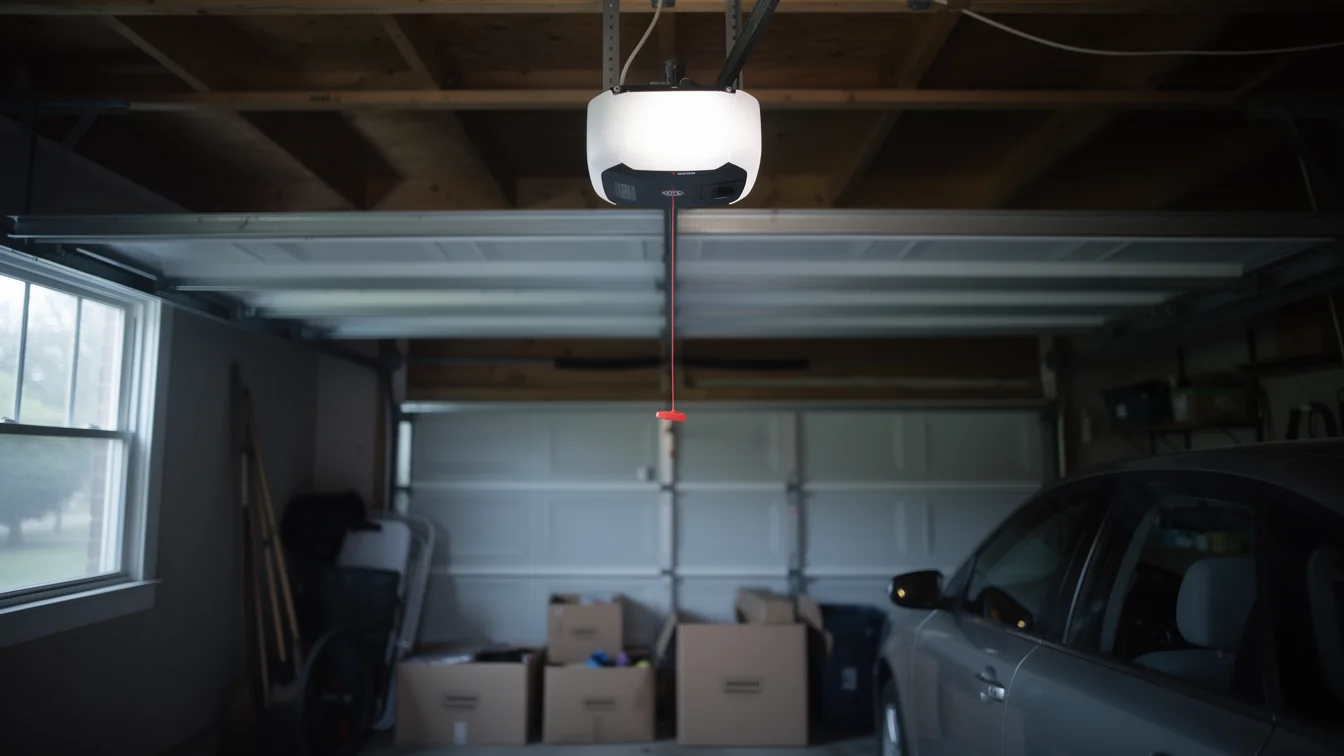
We also draw a line at opener brackets on older framing. Houses from the early part of the 1964-2006 range sometimes have header framing that was never meant to carry a modern opener's torque, and reinforcing that is not a weekend project with a ladder and a drill.
Here's the honest limitation: if a door from the older end of that build range has a cracked or badly warped panel, we usually recommend replacement over repair. Parts for some of that original hardware are no longer stocked, and chasing down a match costs more in time than a new door costs in materials. We'll tell you straight when that's the case instead of running the meter on a repair that won't hold.
How we work
What Local Conditions Do
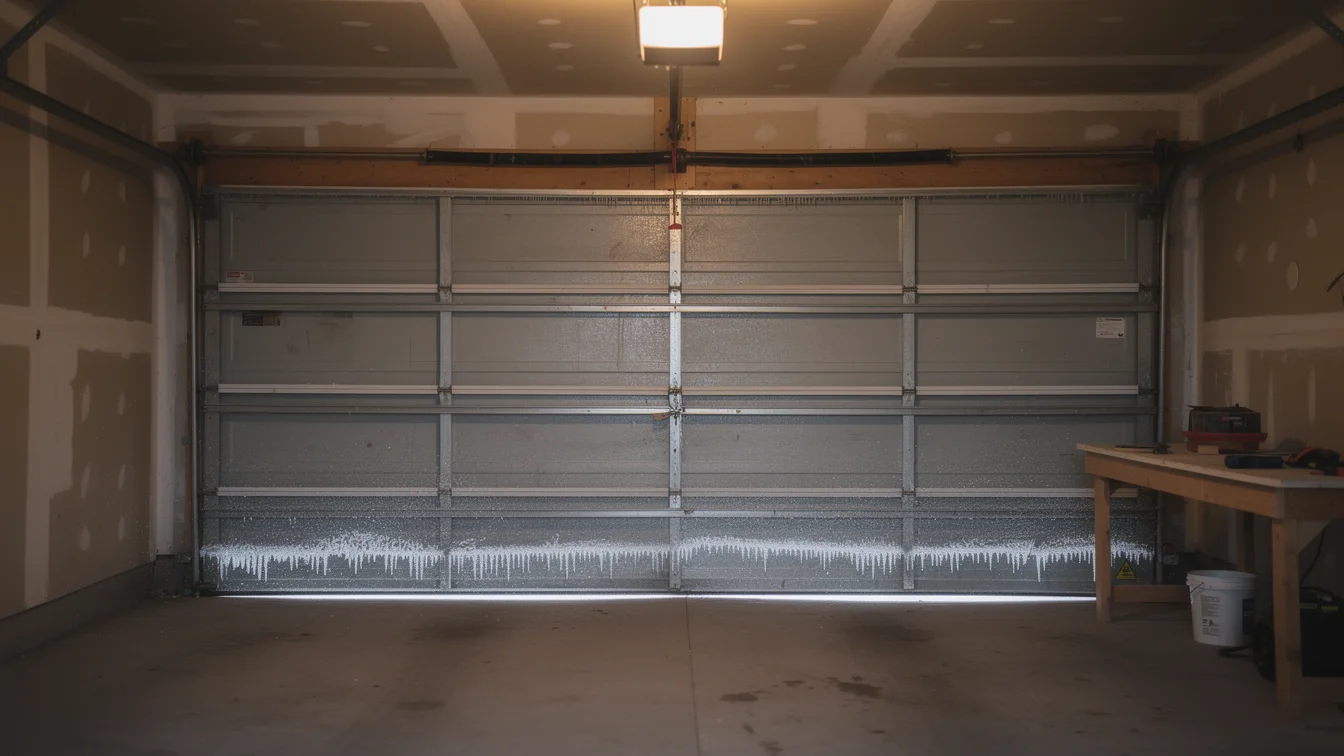
The service area sits in a mild climate band with occasional freeze - not the deep-freeze swings that crack hardware outright, but enough cold mornings each year to matter for an uninsulated door. Metal contracts in the cold, and a door built before insulation rules has nothing between the outer skin and the garage air to slow that movement down. You'll feel it as a door that's stiffer to lift on a cold morning and that rattles more as the panel flexes back once it warms.
Moisture is the quieter issue. Mild-climate humidity swings corrode exposed torsion springs and bare steel track faster than owners expect, especially on doors that have never been repainted or resealed since installation.
None of this requires dramatic weather to show up - just enough freeze-thaw cycling, year after year, on a door that was never designed with a thermal break. That's the local condition that actually drives most of the service calls we get on the older end of the housing stock, more than any single storm or season.
Talk to a local pro
Garage door trouble in Beaverton?
Same-day service with honest, upfront quotes.