Local detail
Where People Go Wrong
Most of the torsion springs failing on Beaverton garage doors right now went in sometime between 1964 and 2006, with a lot of that stock dating back to the 1984 median build year. That's a spring doing two cycles a day for twenty, thirty, even forty years before it finally lets go. The instinct when it snaps is to treat it like a flat tire: pull the broken half, drop in a new one bought online, done by lunch.
That's where it goes wrong. A torsion spring holds the full weight of the door in tension, and the wind bars, cable drums, and shaft on a house from that era often don't match what ships in a generic kit. Wrong wire gauge, wrong wind direction, wrong drum size, and the door either won't balance or the spring fails again in months. We've been called to finish jobs that started as a weekend project and ended with a bent shaft or a cable off the drum.
One honest limitation: if the spring size or drum on your door is no longer stocked anywhere nearby, we may need a day or two to get the right part in rather than jury-rig something that matches but won't hold.
The area
The Situation
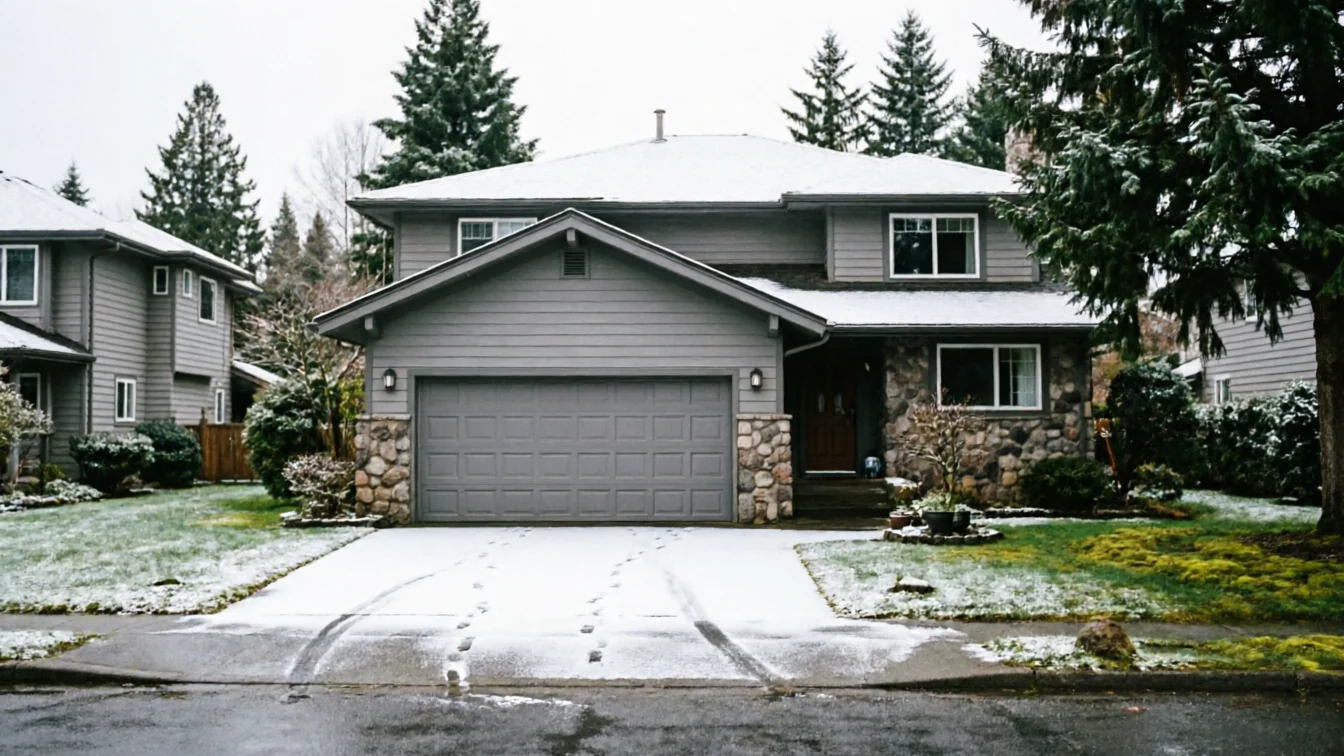
Across the 32 named areas in this service territory, from Cedar Hills two miles out to Forest Grove fifteen miles west, the bulk of the housing is 1980s and 90s stock built on torsion hardware from that era. Close-in neighborhoods like Central Beaverton, Vose, and West Beaverton sit a mile or two from the core and share a lot of that same build window. Farther out toward Sherwood, Newberg, or Canby you start seeing newer construction mixed in, but the median build year for the area as a whole still lands around 1984.
Of the 173,566 households in this area, 82,681 are owner-occupied houses, the group that actually calls about a spring instead of waiting on a landlord. At a median household income of $103,069, a lot of owners here upgrade to insulated steel doors and belt-drive openers rather than patch the original 1980s hardware when it's time for real work, but the spring itself often gets ignored until it breaks, because it's the one part nobody thinks about until it's lying on the floor of the garage in two pieces.
What we find
When It Stops Being a DIY Job
A torsion spring under full wind is storing enough force to break a wrist or worse if the winding bar slips. That's true on any door, any age. What makes it worse here is the age of the stock: a 1980s-era spring has already cycled tens of thousands of times, and the steel is more fatigued than it looks from the outside, even if the coating still looks fine.
This area sits in a mild climate band with occasional freeze mornings, and that's exactly when a spring goes in cold weather. Steel that's already fatigued from three or four decades of daily cycling loses what flex it had left the moment the temperature drops, and a cold snap is often what finally snaps it rather than a sudden overload. If your door has gotten heavy to lift by hand, squeaks on the way up, or the spring looks stretched or uneven side to side, that's the point to call rather than grab a winding bar. We don't recommend DIY spring replacement on any door built before the mid-2000s without matching the exact wind and wire gauge, and most owners don't have a way to check that safely.
How we work
What Local Conditions Do
The mild climate band this area sits in is mostly kind to garage doors. There's no deep freeze most winters, no long stretch of extreme heat, nothing close to a coastal salt-air problem. That's part of why so much of the original hardware from the 1964-2006 build window is still in service instead of rusted out.
But mild doesn't mean nothing happens. A freeze morning after weeks of damp, cool weather is enough to stiffen grease in an old bearing, shrink a weathered rubber seal, or put the last bit of stress on a spring that was already near the end of its life. On a newer door with a factory spring from the last decade, that same cold morning is a non-event. On a door original to a 1980s build, it can be the difference between a door that opens fine and one that won't budge until a tech gets there.
We see this pattern across the older stock in Cedar Hills, West Slope, Garden Home-Whitford, and the rest of the close-in neighborhoods more than in newer construction further out toward Bethany or Sherwood, simply because there's more aged hardware still in daily use in those closer-in areas.
Talk to a local pro
Garage door trouble in Beaverton?
Same-day service with honest, upfront quotes.